Este artículo contiene enlaces de afiliado. Si reservas a través de ellos, podemos ganar una pequeña comisión sin costo adicional para ti — nos ayuda a mantener Authentic Japan gratuito.
Akihabara is easy to overhype and easy to misunderstand. It is not a single attraction, and it is not only "anime town." It is a dense shopping district where electronics, parts shops, hobby floors, trading-card stores, retro games, figure cases, arcades, maid cafes, idol culture, and capsule toys overlap in a few walkable blocks.
That makes Akihabara either one of Tokyo's most rewarding neighborhoods or one of its most exhausting. The difference is whether you arrive with a target. A casual visitor should not try to "see everything." A collector should not waste the first hour in the wrong kind of store.
The Short Version
Go to Akihabara if you want anime goods, manga, figures, trading cards, retro games, camera and electronics megastores, audio gear, computer parts, gachapon, arcades, or themed cafes. Skip or shorten it if you only want old temples, quiet streets, or design shopping.
GO TOKYO lists Akihabara access via JR Yamanote Line, Keihin-Tohoku Line, Sobu Line, Tokyo Metro Hibiya Line, and Tsukuba Express. It also gives useful travel-time context: about 4 minutes from Tokyo Station on the JR Yamanote Line and 18 minutes from Shinjuku Station on the JR Sobu Line, as of its official guide checked July 2026.
For first-timers, the easiest anchor is Akihabara Station's Electric Town side. Start there, do one loop around the main streets, then decide whether your trip is about anime/hobby floors, electronics, arcades, or specialty collecting.
How Akihabara Is Laid Out
Akihabara works best if you think in layers.
The station layer is immediate and convenient: big retail buildings, Radio Kaikan, visible anime signage, convenience, and easy re-entry to trains. This is where casual visitors should begin.
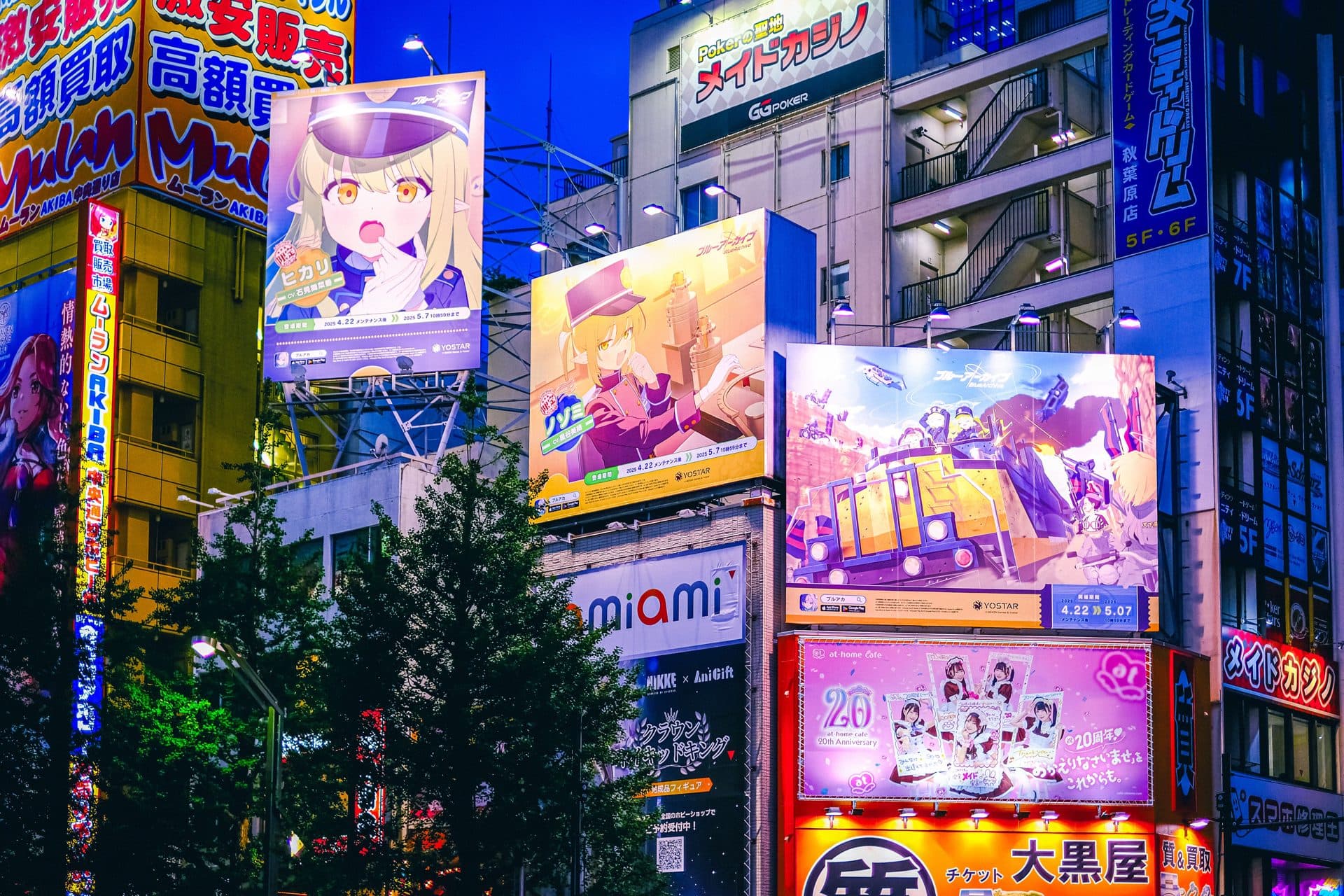
The Chuo-dori layer is the obvious main shopping spine. It has major stores, large signs, and the kind of street visuals most visitors imagine before they arrive.
The side-street layer is where Akihabara becomes more specialized. You find smaller parts stores, hobby shops, secondhand cases, card shops, and narrower buildings where one floor may be exactly what you want and the next floor may be irrelevant.
The practical mistake is staying only at street level. Many Akihabara stores are vertical. A building's best shop may be on the fourth, sixth, or eighth floor.
Anime, Manga, and Figures
For anime and figure shopping, start with Radio Kaikan because it is easy, central, and vertical. The official Radio Kaikan site lists opening hours as 10:00-20:00 and the address as 1-15-16 Sotokanda, Chiyoda-ku, Tokyo, verified July 2026.
Radio Kaikan is useful because it compresses many categories into one building: figures, model goods, cards, character goods, hobby supplies, and specialty shops. Even if you do not buy anything, it teaches the basic Akihabara browsing pattern: check floor directories, ride up, work downward, and compare condition and price before committing.
For manga, keep expectations realistic. If you cannot read Japanese, the shopping value may be more about art books, character goods, magazines, secondhand finds, and limited editions than reading material. English-language manga selection exists in Tokyo, but Akihabara's core strength is Japanese inventory and fandom goods.
For figures, inspect boxes carefully if you care about collector condition. Many secondhand items are excellent, but labels and grading can be detailed. If the price seems surprisingly low, check whether the box is damaged, an accessory is missing, or the item has been opened.
Electronics and Practical Gear
Akihabara's electronics identity is still real, but it is different from the old image of pure gadget discovery. Big stores are easy for cameras, chargers, headphones, appliances, watches, and duty-free shopping. Smaller stores can be better for parts, cables, switches, tools, and niche audio items.
For travelers, the most practical electronics purchases are not always glamorous: a replacement cable, a USB-C charger, a camera battery, a memory card, or an adapter. Check voltage and plug shape carefully before buying anything meant for home use. Japan uses Type A and Type B plugs, and the common voltage is lower than in many countries.
Do not assume every product has English menus or overseas warranty coverage. Ask before buying expensive electronics, especially cameras, watches, and appliances. Duty-free savings are not useful if the product is region-locked or difficult to support at home.
Gachapon and Arcades
Gachapon is one of Akihabara's easiest wins because it works even when you do not speak Japanese. Bring coins or use exchange machines where available. The trap is small spending without noticing. A few ¥300–¥500 turns feel harmless; many turns become a real budget line.
GO TOKYO identifies Akihabara Gachapon Hall as a popular capsule toy specialty store and points to game centers and music-game culture in the area. For a casual visitor, the best approach is to set a small limit and treat gachapon as souvenirs rather than a mission.
Arcades and game centers are also best with a limit. Try rhythm games, crane games, or photo machines if they interest you, but do not let crane-game frustration eat the whole visit. The machine is entertainment, not a shopping guarantee.
Maid Cafes and Themed Cafes
Maid cafes are part of Akihabara's tourism image, but they are not for everyone. The pricing system can be more complicated than a normal cafe, with table charges, set menus, drink requirements, photo options, or performance charges depending on the venue. Because conditions vary by cafe, check the official menu or storefront rules before entering.
The practical rule: if the staff cannot clearly explain the price system in a language you understand, choose another place. A themed cafe should feel playful, not financially confusing.
Timing and Crowd Strategy
Akihabara is not an early-morning neighborhood. Many shops open around late morning, and some smaller places open later. Radio Kaikan officially lists 10:00-20:00, but do not assume every shop in the district follows that exact schedule.
For casual visitors, arrive around 11:00 or after lunch. Weekends are more energetic but more crowded. Weekdays are easier for actual shopping. Evening is visually stronger because the signs and screens carry the atmosphere, but some specialty shopping is easier earlier.
If you dislike crowds, avoid trying to walk slowly on the busiest sidewalks. Step into a building, use upper floors, or move one street over. Akihabara feels far less overwhelming when you stop treating the main road as the whole neighborhood.
What Most Guides Miss
The best Akihabara experience is not always the most famous store. It is the store that matches your exact interest. Trading cards, retro games, model kits, headphones, mechanical keyboard parts, idol goods, secondhand figures, and camera gear all have different best routes.
Before you go, choose one target category. Then give yourself permission to ignore everything else. That is the difference between a satisfying hunt and three hours of visual noise.
Another under-discussed point: tax-free shopping takes time. If you are buying something inexpensive, the paperwork may not be worth interrupting your route. If you are buying something expensive, bring your passport and confirm the shop's tax-free counter rules before you queue.
A Simple First-Time Route
Start at Akihabara Station's Electric Town side. Walk to Radio Kaikan and check the floor guide. If anime, figures, or hobby goods interest you, spend real time there.
Next, walk the main street to understand the scale of the neighborhood. Do not enter every building. Pick one electronics megastore, one hobby building, one game center, and one gachapon stop.
If you still have energy, move into the side streets for more specialized shops. This is where collectors should slow down and casual visitors should be selective.
End with food somewhere nearby or move on to Ueno, Kanda, or Tokyo Station. Akihabara is intense; it is better as a focused block than as an all-day default unless you are genuinely shopping.
Final Verdict
Akihabara is worth visiting when you treat it as a specialized district, not a checklist. It rewards clear interests and punishes vague wandering. Anime fans, collectors, gamers, electronics shoppers, and pop-culture travelers should give it time. Everyone else can still enjoy the visuals and one or two major stops, then move on before the overload sets in.
Is Akihabara worth visiting if I am not into anime?
Yes, if you are interested in electronics, cameras, retro games, arcades, or the visual culture of modern Tokyo. If none of those appeal, keep it short.
What is the easiest Akihabara exit for first-timers?
Use Akihabara Station's Electric Town side for the classic shopping streets and big anime/electronics buildings.
How long should I spend in Akihabara?
Two to three hours is enough for casual visitors. Serious collectors can spend half a day or more.


